



Blog
Who is at Fault in a Rear-End Crash with More Than Two Vehicles?
Filed under Car Accidents Published on May 23, 2019 and updated on July 20, 2026.
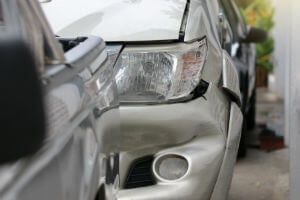 Rear-end accidents happen quite often and they can result in much more severe injuries than people realize. For example, victims of these crashes could suffer from chronic neck pain for quite some time.
When these crashes occur and involve more than two vehicles, it is sometimes difficult to determine who is at fault and how much fault each party has for the crash. There are even rare situations when the driver of the car that was hit last is partially at fault.
In Maryland, the driver who rear-ends another vehicle is usually considered at fault for the accident. However, fault can vary in multi-vehicle crashes or if the lead driver acted negligently, and Maryland’s contributory negligence rule means that any shared fault may prevent recovery of compensation.
In the content below, a Baltimore car accident lawyer from our firm discusses fault in rear-end accidents below to try to help you better understand these confusing situations. If you were injured in a rear-end accident, contact us to schedule a free, no obligation consultation today and learn about your legal rights.
Fault for Most Rear-End Accidents
Most of the time, the driver who crashes into the rear of a vehicle ahead will be entirely at fault. All drivers have a duty to drive safely, which includes following other vehicles at a safe distance.
You must leave enough space between your vehicle and any vehicles ahead to give yourself time and space to avoid hitting the lead car. If the driver ahead of you suddenly reacts to a road hazard by stopping or suddenly slowing down, and there is too small of a gap between both vehicles, you will probably hit the lead vehicle.
However, when more than two vehicles are involved in a rear-end accident, it becomes more difficult to determine who is at fault for damage to each vehicle. Sometimes the driver of the rear car is held liable for damages to all the vehicles involved.
A driver in the middle of a rear-end accident chain can also be at fault in certain situations. For instance, if the middle driver rear-ends the lead driver first, and another car rear-ends the middle driver’s car because he or she was unable to avoid the crash, the middle driver may be held responsible for the entire accident.
When multiple cars are involved, an extensive investigation is usually necessary to determine fault. Each party may have a different story, and each party’s actions could have been involved in the accident’s occurrence. Sometimes drivers all share some amount of responsibility for what happened.
When the Lead Driver is At Fault
In some cases, the driver at the front of a rear-end accident chain could be held responsible for the entire accident. Some scenarios where this may be the case include:
- The front driver suddenly reverses his or her vehicle
- The front driver makes a sudden stop to turn but fails to perform the turn
- The front driver experiences a flat tire but does not pull off the road or use hazard lights
- The front driver’s brake lights are not working, so approaching drivers are unable to detect the lead driver’s braking
Contributory Negligence in Maryland
Maryland is a state that follows a strict contributory negligence statute when it comes to recovering damages in an accident. If a party was in any way at fault for an accident, that party cannot recover compensation for damages.
This means that if your actions are found to have contributed to the accident, even if only minimally, you cannot recover damages from the responsible driver. To pursue a claim against the responsible driver in a rear-end accident case, you must not have played any role in the accident’s occurrence.
FAQs About Multi-Vehicle Rear-End Crashes
Who is liable in a multi-vehicle rear-end crash?
Liability depends on how the chain-reaction crash occurred and which driver or drivers caused the impact. Fault may involve following too closely, speeding, distracted driving, sudden unsafe braking, or failing to maintain control. More than one driver may share responsibility depending on the evidence.
Can more than one driver be at fault for a chain-reaction accident?
Yes, multiple drivers can be at fault in a chain-reaction rear-end crash. Each driver’s actions are evaluated to determine whether they contributed to the collision and resulting injuries. The Law Offices of Peter T. Nicholl can help review the crash sequence and identify all potentially responsible parties.
How do you prove fault in a multi-car rear-end collision?
Fault is proven by showing how each impact happened and which drivers failed to act reasonably. Evidence may include police reports, vehicle damage, witness statements, traffic camera footage, skid marks, and accident reconstruction. This evidence helps connect each driver’s conduct to the injuries and damages claimed.
What if I was pushed into another vehicle from behind?
If you were pushed into another vehicle, you may not be responsible for the second impact. The key issue is whether your vehicle was stopped or moving safely before being struck from behind. The Law Offices of Peter T. Nicholl can help determine whether another driver’s negligence caused the chain reaction.
What injuries are common in multi-vehicle rear-end crashes?
Common injuries include whiplash, back injuries, concussions, shoulder injuries, and aggravation of pre-existing conditions. These injuries may be disputed by insurance companies, especially if symptoms appear gradually or multiple impacts occurred. Medical records are important for linking the crash to the injury and documenting long-term effects.
How does insurance work after a multi-vehicle rear-end accident?
Insurance claims can be more complicated because several drivers and policies may be involved. Coverage depends on fault, policy limits, available evidence, and whether multiple injured people are making claims. Identifying every applicable policy is important when evaluating potential compensation.
Should I give a recorded statement after a chain-reaction crash?
You should be cautious before giving a recorded statement to an insurance company after a multi-vehicle crash. Statements can be used to dispute fault, minimize injuries, or shift blame between drivers. The Law Offices of Peter T. Nicholl can help protect your claim before you respond to insurer requests.
When should I contact a lawyer after a multi-vehicle rear-end crash?
You should contact a lawyer soon after a multi-vehicle rear-end crash if you were injured, fault is disputed, or multiple insurers are involved. Early legal guidance helps preserve evidence, document injuries, and prevent insurers from shifting blame unfairly. Timely action can also help protect important claim deadlines.
Contact Our Firm for Trusted Legal Assistance
If you were injured in a rear-end car accident, The Law Offices of Peter T. Nicholl may be able to assist you in pursuing financial compensation for damages. We are prepared to review your case and inform you of the legal options that may be available.
You can contact us right away to request your legal consultation, which is free of charge and puts you under no obligation to take legal action. We will not bill for representing you unless you receive financial compensation.
You can contact us online or by phone. Call 410-244-7005 or click on the case review form at the top right of this page.
Related Topics
- Suing After a Multi-Car Crash in Baltimore
- How Expert Witnesses Help Car Crash Cases
- How Accident Reconstruction Can Help a Car Crash Claim

