



Blog
Multi-Vehicle Snowstorm Pileups in Baltimore: Can You Still Sue If Weather Was a Factor?
Posted on behalf of Peter T. Nicholl in Car Accidents Published on January 16, 2026 and updated on March 18, 2026.Can I Sue After a Multi-Vehicle Car Accident Caused by Snow or Ice in Baltimore?
Yes. Snow and icy roads do not excuse negligent driving under Maryland law. If another driver caused or contributed to a winter pileup by speeding for conditions, tailgating, or losing control, you may have the right to file a personal injury claim. Under Maryland’s strict contributory negligence rule, any fault assigned to you can prevent recovery.
A winter pileup in Baltimore unfolds in seconds, leaving victims to deal with serious injuries, multiple insurers, and complex questions about who caused the crash. When snow or ice contributes to a collision, determining fault becomes far more complicated. Waiting too long to seek legal help can make it harder to preserve evidence and protect your ability to recover full compensation.
What Legal Options Do I Have After a Baltimore Winter Pileup?
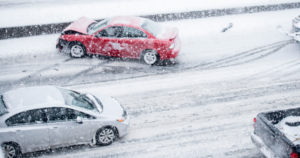 When you are injured in a winter pileup in Baltimore, you may have the right to pursue compensation through a personal injury claim against any driver whose negligence contributed to the crash. Depending on the circumstances, this could mean filing claims against one driver or several — each of whom may carry separate insurance coverage.
Maryland law does not excuse careless driving simply because roads are snow-covered or icy. Drivers who were going too fast for road and weather conditions, tailgating, or making unsafe lane changes can be held liable for the harm they caused. If their negligence contributed to your injuries, you have legal options worth pursuing.
At The Law Offices of Peter T. Nicholl, our car accident lawyers in Baltimore are prepared to help you identify every responsible party and pursue the full compensation you deserve — including medical costs, lost wages, and pain and suffering.
How Is Liability Determined for a Multi-Vehicle Crash Caused by Snow or Icy Roads?
Liability is rarely straightforward when multiple vehicles are involved in a car crash — especially when caused by black ice or a snowstorm. These winter crashes are uniquely complex because often several drivers may have contributed to the incident in some way. It is not enough to show that snow or ice made driving difficult; the key question is whether any driver failed to act with reasonable care for the conditions.
Driver Actions Are Compared to a Reasonable Standard
Each driver’s behavior before the crash is examined and measured against what a careful driver would do in the same conditions. Tailgating is a common aggressive driving behavior that can constitute negligence — particularly on slick winter roads where stopping distances increase significantly.
Fault Can Be Shared Among Multiple Drivers
In pileups, more than one driver may be responsible. Maryland law allows multiple parties to be held accountable when their actions contribute to the crash.
Insurance Investigations Are Detailed
Insurance companies and crash investigators review vehicle positions, witness statements, and available physical evidence — though snow and ice can obscure skid marks and alter vehicle positions, making winter crash investigations particularly challenging to reconstruct.
How Does Maryland’s Contributory Negligence Law Work in a Multi-Vehicle Crash Caused by Snow or Ice?
Maryland is one of only a handful of states that follow a strict contributory negligence rule. Under this rule, if you are found even one percent at fault for a crash, you may be barred from recovering any compensation at all. In winter pileups, this rule carries serious consequences. Chain-reaction collisions unfold in seconds, with multiple drivers responding to slick or snow-covered roads simultaneously. A momentary misjudgment — like failing to account for reduced visibility or misjudging the distance needed to slow down safely — can be used by insurance companies to argue you contributed to the crash, giving them room to deny your claim entirely.
When our attorneys manage your case, we analyze the sequence of events and each driver’s actions in detail to dispute any unfair assignment of fault against you.
Understanding Joint and Several Liability and How it Applies in a Maryland Multi-Vehicle Crash
When multiple drivers contribute to a winter pileup, you shouldn’t have to worry about whether each one can pay their share. Maryland’s joint and several liability rule means that if more than one driver is found responsible for your injuries, each at-fault party can be held liable for the full amount of your damages — not just a portion based on their individual role in the crash.
In practical terms, this matters enormously. If one driver carries minimal insurance or cannot pay, you may still be able to recover your full compensation from the other responsible parties. In a chain-reaction winter crash involving several vehicles, this protection can mean the difference between a full recovery and being left significantly under-compensated.
It’s worth understanding how contributory negligence and joint and several liability work together in these cases. While contributory negligence can bar your recovery if you are found at fault, joint and several liability works in your favor once fault is established against others.
At The Law Offices of Peter T. Nicholl, we work diligently to ensure the financial burden falls on the negligent drivers, not on you. We investigate thoroughly to identify every party who contributed to your crash, building the strongest possible case for your full recovery.
Why Is It Harder to Prove Fault in a Baltimore Winter Pileup?
Winter pileups involving multiple vehicles create layers of legal challenges that make proving who caused what more complex. Snow, ice, and low visibility don’t just make roads dangerous — they make crashes harder to reconstruct, fault harder to assign, and claims harder to win without the help of an experienced legal team.
- Low Visibility: Snow, blowing wind, and darkness during winter storms make it hard for drivers and witnesses to see what happened.
- Hidden Road Hazards: Ice patches, snowdrifts, and uneven surfaces can cause vehicles to slide unpredictably, complicating fault analysis.
- Shifting Vehicle Positions: Slippery roads allow cars to slide after initial contact, making it harder to determine which impact caused which damage.
- Unreliable Witness Accounts: Poor visibility and sudden chain reactions can lead to inconsistent statements from drivers and bystanders.
Acting Quickly After a Baltimore Winter Pileup Can Make or Break Your Case
In Maryland, you generally have three years to file a personal injury claim, but waiting can cost you. If you get injured in a winter pileup crash, there will be multiple insurance companies involved from day one. This is important to understand, because each insurer will be looking for ways to minimize what they pay out.
Severely injured victims in a multi-vehicle crash can quickly exceed available coverage, and delays give insurers more opportunity to dispute liability, shift blame, and limit what you recover.
Filing your claim immediately better positions you to hold every at-fault party accountable and secure all available insurance coverage before limits are reached.
Additional Hazards Victims Face After a Winter Chain-Reaction Crash in Baltimore
Chain reactions or any type of multi-vehicle crashes often have devastating outcomes. In winter, the freezing weather and slick roads create additional dangers and hazards for all involved.
- Multiple Impacts Increase Injuries: Repeated collisions typically mean multiple injuries that are more severe
- Exposure to Cold: Injured victims trapped in vehicles or stranded on icy roads risk rapid body-heat loss and hypothermia, which can cause medical conditions to worsen faster.
- Limited Vehicle Escape: Damage from multiple impacts can make it difficult to exit the vehicle safely.
- Delayed Emergency Response: Snow, ice, and traffic from the crash creates delays for first responders, increasing the time before victims get medical help.
- Secondary Collisions: Sliding vehicles or other drivers can strike already-injured victims, creating additional trauma.
FAQs People Ask About Multi-Vehicle Crashes Caused by Ice, Snow and Winter Weather
Q: How does insurance work when several vehicles are involved in Maryland?
Each driver’s policy may be responsible for covering damages, and multiple insurers often dispute fault, delay payments, or limit coverage. Acting promptly better positions you to recover the compensation you need.
Q: Can I still recover if multiple drivers were involved in a winter pileup in Maryland?
Yes. Maryland law allows you to pursue compensation from all at-fault drivers. However, because Maryland follows a strict contributory negligence rule, any amount of fault assigned to you can bar you from recovering any compensation.
Q: Does bad winter weather automatically excuse drivers from liability in Maryland?
No. Drivers in Maryland are legally required to adjust for road conditions. Snow, ice, or slick roads do not automatically absolve a driver from responsibility for negligence.
Q: How soon should I contact a Maryland car accident lawyer after a winter multi-vehicle crash?
Immediately. You cannot call too soon, but you can call too late. Prompt action preserves your rights and ability to secure the compensation you need, especially when multiple insurers, severe injuries, and winter hazards are involved.
Need Legal Help After a Winter Car Crash? Call Our Baltimore Law Firm Today
Winter pileups in Baltimore can leave you with serious injuries, dealing with multiple insurers, and struggling to understand complicated liability. Seeking legal help promptly protects your right to take legal action.
At The Law Offices of Peter T. Nicholl, we have seen the devastating impact victims face following a multi-vehicle collision. When we manage your case, we take immediate steps to protect your rights, preserve evidence, and dispute any liability unfairly assessed against you.
Your initial consultation is completely free, and there are no upfront costs or fees to pay when we represent you. We only get paid if you do.
Take the first step toward protecting your rights.
Call our Baltimore law firm today. 410-244-7005

