



Blog
Ways to Prove the Other Driver Was Distracted When They Hit You
Filed under Car Accidents Published on August 20, 2020 and updated on July 20, 2026.
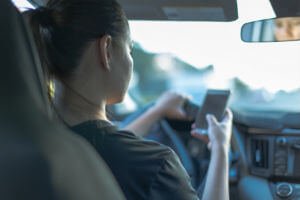 Distracted driving is especially dangerous, making up a large percentage of car accidents that happen on Maryland roads. If you have been injured by a distracted driver, you may be eligible to file a claim to pursue compensation to help cover medical bills and lost wages.
You may be able to prove distracted driving with evidence such as the police report, witness statements, photos, video footage, cellphone records, or social media activity. These records may show the other driver was texting, using a phone, eating, adjusting GPS, or otherwise not paying attention when the crash happened. A lawyer can help gather and preserve this evidence before it is lost.
But how do you prove that the other driver was distracted at the time of the crash? Being able to prove this can be challenging without the help of an experienced lawyer by your side.
Below, our Baltimore car accident lawyers explain some ways to show that the driver was texting, eating or drinking, adjusting the radio, using GPS or was otherwise distracted when he or she hit you. We know how to conduct accident investigations and gather supportive evidence to build a strong case. An initial consultation is free of charge to learn whether you have a valid claim.
Evidence to Support Distracted Driving
Should your claim have merit and we represent you, there are multiple sources of evidence that can be collected to help prove that the crash was possibly due to distracted driving. This evidence may include:
The Official Police Report
It is important to call 9-1-1 after a car accident, even more so if you think it was caused by a distracted driver. The responding police officer will ask you and the other driver what happened, examine the accident scene, and put together an official police report of his or her observations. Some of these observations may provide supportive evidence to strengthen your claim for compensation, such as:
- The driving speed of the other driver at the time of the crash
- If the other driver used his or her brakes before impact
- The other driver admitting he or she was distracted
- What the officer discovered on the other driver’s cellphone
Pictures and Video Footage of the Accident Scene
Pictures and video footage taken during the time of the crash may help identify that the other driver was distracted. Pictures that show a lack of tire marks could indicate that the other driver did not hit the brakes because he or she was possibly distracted. Any vehicle damage captured could not only show the extent of damage in the crash, but that the other driver failed to swerve before impact.
Video footage from traffic cameras or surveillance cameras from nearby businesses may have recorded the other driver using a cellphone, holding a food item, or engaging in other distracting behaviors. It may serve as proof that the other driver’s hands were not on the wheel and focus was not on the road.
Talking With Witnesses
Anyone present at the time of the car accident may be willing to offer testimony about what he or she saw. Some possible witnesses could be your passengers, the other driver’s passengers, people in other vehicles or pedestrians. They may have seen the other driver texting, reaching for items, changing music, adjusting the GPS, or otherwise taking his or her focus away from driving safely. Getting statements from these witnesses could show the driver was distracted.
Cellphone Records
Another way to help prove driver distraction is through cellphone records. Your lawyer may be able to subpoena these records from the other driver’s phone company. Cellphone records will show the exact time a text was sent or a call was made or answered when the crash happened.
In some situations, the responding officer will inspect and/or confiscate a cellphone at the accident scene, which may provide the additional evidence needed to establish that the other driver was distracted.
Social Media Presence
Other evidence that leaves an electronic footprint is having a presence on social media. If the other driver was using social media at the time of the crash, this activity could be logged and timestamped.
Your lawyer may use an expert to uncover electronic evidence of distracted driving, such as him or her posting or commenting on a message or uploading a photo or video on a social media platform to help strengthen your claim.
Distracted Driving Laws in Maryland
In Maryland, distracted driving is defined as any activity that takes a driver’s attention away from the primary task of driving. All distraction endangers the lives of drivers, passengers and pedestrians.
State law currently prohibits all drivers from using handheld cellphones and reading, writing or sending text messages while behind the wheel. Drivers under 18 also cannot use cellphones while driving, even in hands-free mode.
The fines for texting and driving varies but does not usually exceed $500. If you are pulled over for using a cellphone while driving without using the hands-free mode, you could be fined up to $75 for the first offense, $125 for the second offense and $175 for the third offense.
Frequently Asked Questions About Proving Distracted Driving After a Crash
How can distracted driving be proven after a car accident?
Distracted driving can be proven with evidence such as phone records, witness statements, crash reports, vehicle data, photos, video footage, and driver admissions. The legal issue is whether the distraction caused or contributed to the crash. The Law Offices of Peter T. Nicholl can evaluate which evidence may help establish fault.
Can cell phone records prove the other driver was distracted?
Yes, cell phone records may help show whether the other driver was texting, calling, or using data near the time of the crash. These records can support negligence arguments when they align with the collision timeline. Additional evidence may still be needed to connect phone use directly to the cause of the accident.
What if the distracted driver denies using a phone?
A distracted driver’s denial does not prevent you from proving the claim with other evidence. Witnesses, surveillance footage, vehicle data, phone records, and crash scene evidence may contradict the driver’s statement. The Law Offices of Peter T. Nicholl can assess whether the available facts support a distracted driving investigation.
Can witnesses help prove distracted driving?
Yes, witnesses can help prove distracted driving if they saw the driver looking down, holding a phone, reaching for something, eating, or failing to react before impact. Their statements may help establish what the driver was doing immediately before the crash. Witness details are most useful when collected before memories fade.
Can traffic cameras or surveillance video help prove distraction?
Yes, traffic cameras, dashcams, nearby business cameras, or residential surveillance footage may help prove distraction. Video can show lane drifting, delayed braking, head position, hand movement, or failure to avoid a hazard. Prompt action matters because some video systems overwrite footage quickly after a crash.
Can distracted driving evidence affect compensation?
Yes, distracted driving evidence can affect compensation by helping prove fault, causation, and the seriousness of the negligent conduct. Strong evidence may support claims for medical bills, lost wages, pain and suffering, and long-term damages. The Law Offices of Peter T. Nicholl can connect distraction evidence to the injuries and losses claimed.
What should I do if I suspect the other driver was distracted?
You should document the scene, identify witnesses, seek medical care, preserve photos or video, and avoid direct disputes with the other driver. Distracted driving claims depend on evidence that may disappear quickly, including phone data and surveillance footage. The Law Offices of Peter T. Nicholl can help determine what evidence should be preserved.
Can distracted driving cause long-term injury claims?
Yes, distracted driving can lead to long-term injury claims when the crash causes lasting pain, permanent impairment, future treatment needs, or reduced earning ability. The claim must connect the driver’s inattention to the collision and resulting damages. Medical records, expert opinions, and employment documentation may be needed to prove the long-term impact.
Get in Touch With a Licensed Attorney
If you were injured in a crash you believe was committed by a distracted driver, there may be sufficient evidence to file a claim for compensation. Our licensed attorneys at The Law Offices of Peter T. Nicholl have pursued maximum compensation in verdicts and settlements on behalf of those who have been harmed by others.
An initial consultation with our firm is 100 percent free with no risks or obligations. You pay us nothing up front to utilize our services should you have a valid claim. We only get paid if you obtain a recovery.
Call 410-244-7005 to see how we may be able to help.
Related Resources
- Evidence to Strengthen a Car Accident Claim
- Accident Reconstruction for a Car Crash Claim
- Expert Witnesses for Car Crash Cases

